
Heard it has been snowing thickly in Ankara.

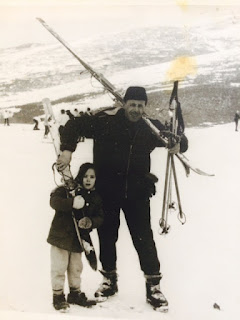
When I was a child, we used to go skiing in Elmadağ every weekend. We would stay at the ski lodge. Early on Saturday mornings — still dark, in Ankara’s sharp, biting cold — we would make our way to the Ski Club where the buses departed. (My mother, and later my father, even served as its president for a while.) The club was at the very bottom of Akay Street.
The skis would be piled into the luggage hold, jokes would start flying, and off we’d go.
There was a bakery just outside the city. We always stopped there. A few people would jump off the bus and return carrying armfuls of steaming loaves. They would be torn open right there, while still breathing out warmth, and filled with cheese or sausage. The smell of fresh bread would mix with the tea poured from thermoses, and we would eat happily as the road carried us forward.
When the concrete ended and the land opened up — once we passed the dump at the edge of the city — we knew we were on the Elmadağ road. For nearly an hour we would move through endless, flat whiteness, seeing only the occasional lone tree.
Then, almost inevitably, the bus would fail to climb either the “Donkey-Breaker Hill” or the famous slope near Yakupabdal village.
After a few attempts and some sliding backwards, someone would shout:
“Men, out!”
The men would jump off and push the big bus together, shoulder to shoulder, shouting “Hooop!” until it moved again.
Sometimes, though, the road would be completely closed by snow. Then the bus would be left behind, and we would walk the remaining four kilometers from the village to the ski lodge — bags on our backs, skis on our shoulders — singing what felt like a skier’s marching song.
“We climb toward the snowy high mountains,
Reaching together toward purple-black clouds.
Our joy, our oath, our beloved — the skis,
The winds our wings, the snowy mountains our home.”
I was usually sitting on my father’s shoulders back then. My fingers and toes would almost freeze. There was nothing to see but endless white. Sometimes the wind cut into your face like needles. Sometimes there was fog. And sometimes, out of that storm and fog, packs of enormous dogs would rush toward us barking — only to retreat when they saw the sticks in our hands.
When we finally reached the lodge, the stoves would be lit immediately — or Asalettin Efendi would already have done it. We would rest for a moment, and then head straight out again.
In those early years, there was no ski lift. We carried the skis up the hill ourselves, slid down, then climbed again. And again.
Later, Asalettin Efendi took charge of the lift too.
“Asalettin Efendi, will the lift run today?”
People shouted encouragement as they skied:
“Great move!”
“Beautiful turn!”
“Perfect stance!”
Or sometimes warnings:
“Open right! Lean left!”
Below us, Ankara lay like a dark lake of soot.
Evenings belonged to the fireplace. After dinner we would gather around it, and late at night sausage would be grilled over the flames. I would roll across the wonderfully smooth floor of the lodge on my roller skates, tracing figure eights across the big hall, jumping where I could.
Sometimes the electricity would suddenly go out. Someone would head down to the basement with a flashlight to fix the generator.
Conversations by the fire lasted late into the night.
Upstairs, on the mezzanine balcony overlooking the hall, the “young people” — my older siblings and their friends — spent their time. I would go to bed without waiting for anyone.
There were two dormitories upstairs, reached by wooden stairs. The pillows, blankets and sheets we took out of the cupboards and made our own beds with had a smell entirely their own.
Lying on the top bunk by the window in the smaller dormitory, I would listen to the whistling of the storm and watch, through the fogged glass, the endless white darkness outside — and the single bare tree in front of the lodge bending in the wind.
And the red glow of the stove’s fire dancing on the ceiling.
On Sunday mornings the lodge filled with the smell of tea. Skiers gathered around large tables, eating breakfast cheerfully. There was always joy — or maybe it only felt that way because I was still a child.
The big black dog who lived there — Karabaş — always got his share too.
By Sunday afternoon we were exhausted from two days of skiing, muscles aching, ankles sore from the hard edges of the boots. We would return along the same path — often sliding back toward the bus — and ride home laughing, talking, singing all the way back to Ankara.
Until the next weekend.
Later, there were two-week winter camps during the February holidays. At the end of them, we returned to the city with faces burned dark by the snow — as if only our eyes remained.
So much so that until I was fourteen or fifteen, I believed there was no life in the city during weekends or winter breaks.
It snowed heavily in Ankara today — and these are the things that came back to me.
⸻
